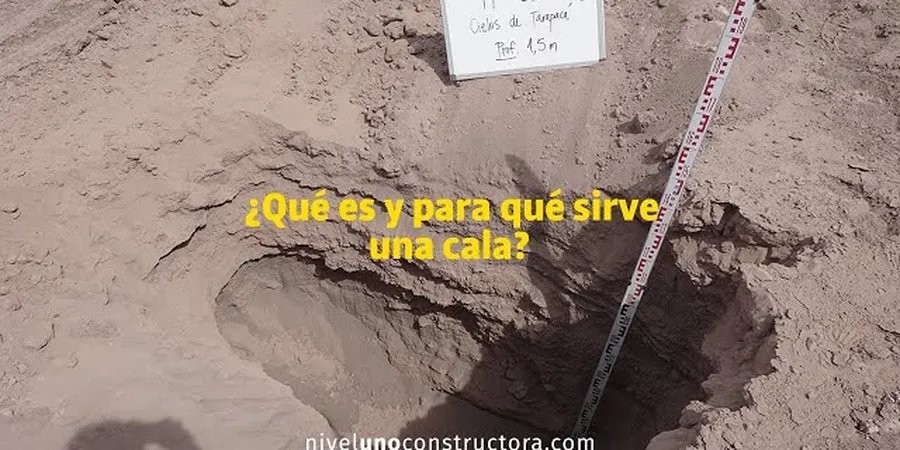
The City of Chicago Department of Buildings enforces some of the strictest geotechnical provisions in the Midwest, requiring subsurface exploration that goes well beyond SPT data alone. For shallow foundation design, frost-protected footing verification, and utility corridor mapping, an exploratory test pit provides the most reliable direct observation of Chicago’s notoriously variable surficial geology. Our field teams execute open excavations in compliance with ASTM D2488 and OSHA Subpart P, logging lithology in detail across the weathered glacial till, lacustrine silts, and anthropogenic fill that define the Chicago Lake Plain. The visual continuity of a test pit profile often reveals buried basements, rubble zones from the 1871 fire, and organics that a boring log might miss, making it indispensable before installing footings in neighborhoods like Wicker Park or Hyde Park.
A test pit in Chicago’s urban fill will often expose a century of construction debris before the native till is reached — that visual evidence changes the foundation strategy.
Local context
During a recent excavation on a former industrial site near Pilsen, the test pit exposed a 6-foot-thick lens of saturated cinder fill that had been capped by only 18 inches of gravel. The fill contained sulfates and petroleum-stained soil that would have degraded conventional concrete footings, and the perched water within it meant the basement slab would require an underdrain system the original geotechnical report had not anticipated. In Chicago, where fill thickness can exceed 12 feet in historically low-lying areas, skipping direct visual inspection is a risk no foundation engineer should accept. A test pit also identifies old timber piles, abandoned utilities, and unstable trench backfill that can cause differential settlement even under a well-designed mat foundation. The OSHA Subpart P classification is logged on every pit report to inform the contractor’s trench safety plan before any permanent excavation begins.
Top questions
How deep can a test pit be excavated in Chicago before shoring is required?
Per OSHA Subpart P, any excavation deeper than 5 feet requires a protective system unless the excavation is made entirely in stable rock. In Chicago’s typical clay and fill soils, most test pits beyond 4–5 feet require either sloping, benching, or a trench box. Our field supervisor classifies the soil on site and documents the protective system used on the pit log.
What does an exploratory test pit cost in Chicago?
A standard exploratory test pit in Chicago typically ranges from US$440 to US$930, depending on depth, access constraints, and the number of disturbed samples collected. Pits requiring traffic control, pavement restoration, or extensive utility coordination fall at the upper end of that range.
Can a test pit replace SPT borings for foundation design?
A test pit complements SPT borings but does not fully replace them. It provides excellent visual detail of the shallow profile, fill thickness, and groundwater seepage, but it cannot reach the deeper bearing strata or measure blow counts the way SPT does. Most Chicago projects combine test pits for the upper 10–15 feet with SPT or CPT for deeper exploration.
How do you handle groundwater inflow during a test pit in Chicago?
If the pit encounters groundwater above the planned bottom elevation, we record the seepage rate and static water level after a minimum 24-hour observation period. For pits that must remain open for sampling or inspection, we deploy a small sump pump and note the stabilized inflow rate, which provides a field estimate of hydraulic conductivity useful for dewatering design.