← Home · Laboratory

Atterberg Limits Testing in Chicago: Clay Classification & Soil Behavior

Together, we solve the challenges of tomorrow.

LEARN MORE →

Glacial Lake Chicago left this city with a legacy: up to 100 feet of clay till and lacustrine deposits that swell in spring and shrink in August. When a contractor on the South Side hits a pocket of soft blue clay, the first question is always about plasticity. That is where Atterberg limits come in. We run these tests because Chicago foundations move with moisture, and knowing the liquid limit and plastic limit tells you exactly how much movement to expect. Our lab team processes samples from the Loop, Lincoln Park, and out toward O'Hare, often pairing Atterberg limits with a grain size analysis to complete the USCS classification. For deeper exploration where SPT is needed, we also coordinate with our SPT drilling crews to get undisturbed samples from the stiff clay crust.

A plasticity index above 30 in Chicago clay means you are dealing with a soil that can double its volume with seasonal moisture change. That number alone dictates undercut depth.

Methodology and scope

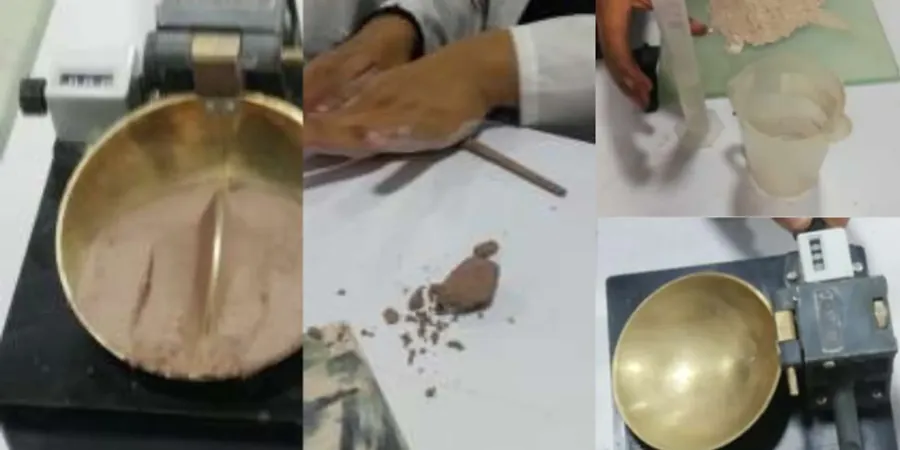
ASTM D4318 governs the method: the liquid limit is determined with a Casagrande cup or cone penetrometer, and the plastic limit by rolling threads to 3.2 mm diameter. In Chicago, these numbers drive everything from excavation support design to pavement subgrade rating. The city's Department of Water Management often requests PI values below 15 for sewer backfill, and IDOT specs require A-6 or A-7-6 classification checks before placing structural fill. We see liquid limits ranging from 28 to 62 across the metro area, with the highest values in the Des Plaines River valley. When plasticity runs high, we often recommend a proctor test to see if moisture conditioning can bring the fill to spec, or a triaxial test to measure drained strength under future loading conditions. Every sample is processed in our temperature-controlled lab. Results are typically ready within 48 hours.
Atterberg Limits Testing in Chicago: Clay Classification & Soil Behavior
Technical reference image — Chicago

Local considerations

Chicago recorded its highest-ever lake level in 2020 at 581.8 feet IGLD 1985, and the following spring brought foundation heave claims across the North Shore. When Atterberg limits are skipped, the risk is not theoretical—it is a call from a homeowner six months after closing. High-plasticity clays classified as CH under USCS can generate swell pressures exceeding 15 kPa at shallow depths. That is enough to lift a garage slab or crack a basement wall. The IBC and Chicago Building Code both require soil classification data before issuing permits for new construction. Without a liquid limit and plastic limit determination, you are guessing on bearing capacity reduction factors and lateral earth pressure assumptions. Our reports include the full Atterberg data set so your geotechnical engineer has what they need to design for local conditions.

Need a geotechnical assessment?

Reply within 24h.

Email: contact@geotechnicalengineering1.org

Technical parameters

ParameterTypical value
Test StandardASTM D4318-17e1
Liquid Limit DeviceCasagrande cup (manual or motorized)
Plastic Limit MethodHand rolling, 3.2 mm thread criterion
Sample PreparationWet prep, passing No. 40 sieve
Typical Chicago LL Range28% to 62%
ReportingLL, PL, PI (%), USCS symbol, AASHTO group
Turnaround24-48 hours standard, same-day rush available

Associated technical services

01

Standard Atterberg Limits (ASTM D4318)

Liquid limit by Casagrande cup, plastic limit by hand rolling, and calculated plasticity index. Includes USCS classification and AASHTO group assignment. Sample prep per method A (wet) or B (dry).

02

One-Point Liquid Limit

Rapid liquid limit estimation for projects with tight schedules. Valid for soils that plot near the A-line. Often combined with a full grain size curve to confirm classification.

03

Shrinkage Limit & Volumetric Change

When PI exceeds 25, we add the shrinkage limit test to quantify potential volume change. Useful for basement walls, slab-on-grade design, and utility trench backfill specifications.

Applicable standards

ASTM D4318-17e1: Standard Test Methods for Liquid Limit, Plastic Limit, and Plasticity Index of Soils, ASTM D2487-17: Standard Practice for Classification of Soils for Engineering Purposes (Unified Soil Classification System), AASHTO T 89-22: Standard Method of Test for Determining the Liquid Limit of Soils, AASHTO T 90-22: Standard Method of Test for Determining the Plastic Limit and Plasticity Index of Soils, Chicago Building Code Chapter 18: Soils and Foundations

Frequently asked questions

What do Atterberg limits tell me about my Chicago site?

They define the moisture content boundaries where fine-grained soil changes from solid to plastic to liquid. The plasticity index (PI = LL - PL) tells you how much water the soil can absorb before losing strength. In Chicago, where glacial lake clays dominate, a PI above 20 signals moderate to high shrink-swell potential that must be addressed in foundation design.

How much does an Atterberg limits test cost?

A standard set of Atterberg limits (liquid limit, plastic limit, and plasticity index) typically runs between US$50 and US$100 per sample. The exact cost depends on the number of samples and whether you need rush turnaround. We provide a firm quote before any work begins.

How long does it take to get results?

Standard turnaround is 48 hours from sample receipt. We offer a 24-hour rush service for an additional fee, and same-day results are possible if samples arrive before 10 AM and the lab schedule permits. The drying and preparation steps are what take the most time.

Do I need Atterberg limits if I already have a grain size analysis?

Yes. Grain size tells you the distribution of sand, silt, and clay particles, but it does not tell you how the clay fraction behaves with water. Two soils can have the same clay content but vastly different plasticity. Atterberg limits are essential for USCS classification of fine-grained soils and for any design involving excavation, compaction, or slope stability.
Location and service area

We serve projects across Chicago and its metropolitan area.

View larger map