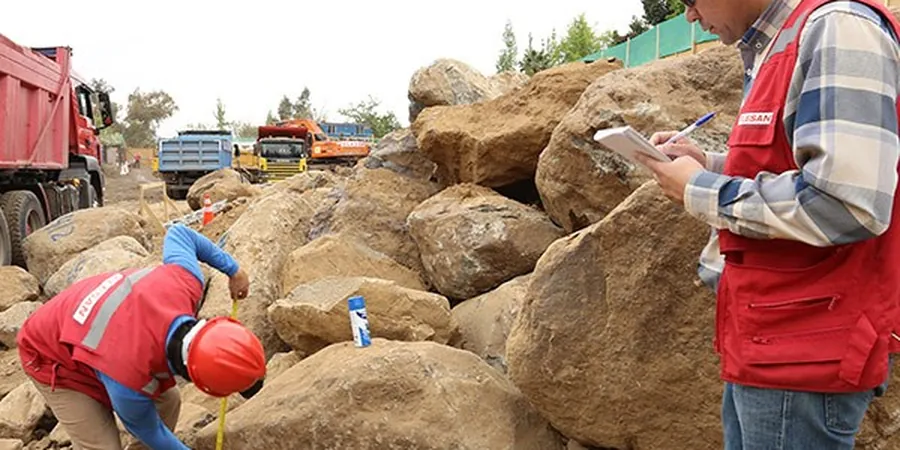
A recent mixed-use development near the Chicago River required a thorough geotechnical investigation after the initial borings revealed a complex sequence of fill over compressible lacustrine silts. The structural engineer needed more than standard blow counts to finalize the foundation design, given the proximity to adjacent 1920s-era buildings with shallow footings. This scenario repeats itself across Chicago, where the subsurface rarely matches textbook profiles. A soil mechanics study in this context must account for the post-glacial history of the region, including the fluctuating levels of ancestral Lake Michigan that deposited the Blodgett and Wadsworth formations. Understanding how these layers respond to load, vibration, and seasonal moisture changes is what allows the project team to move forward with confidence, especially in dense urban neighborhoods like River North or the West Loop.
Chicago's glacial stratigraphy demands a soil mechanics study that goes beyond classification—effective stress paths for the local Chicago Clay can differ significantly from Gulf Coast soft clays.
Process overview
Chicago sits roughly 180 meters above sea level, with its downtown built on a thin crust of artificial fill over glacial drift that can extend more than 50 meters deep in some areas. The city's soil mechanics challenges are defined by the presence of Chicago Clay—a stiff, overconsolidated till—interbedded with water-bearing sand lenses and soft silty zones. When we run a program for a new tower in Streeterville, we often pair advanced triaxial testing with a detailed
grain size analysis to distinguish between the dispersive silts of the lake plain and the more competent tills. The mineralogy of the local clays, rich in illite and chlorite, influences both the drained and undrained shear strength, making site-specific
Atterberg limits essential for interpreting any soil mechanics study. The interaction between these units and the high water table, typically within two to three meters of grade near the lakefront, governs excavation support design and dewatering requirements.
Top questions
Why is a soil mechanics study required for a small residential addition in Chicago?
Chicago's building code, under the IBC Chapter 18, mandates a geotechnical investigation for any new structure or addition. Even a single-story bump-out in neighborhoods like Beverly or Portage Park can experience differential settlement if it bears on fill over compressible silts. A targeted soil mechanics study identifies the bearing stratum and provides the allowable bearing pressure, protecting against future cracking and structural distress.
What is the typical cost range for a soil mechanics study in Chicago?
For a standard commercial lot or residential teardown in Chicago, a comprehensive soil mechanics study including drilling, laboratory testing, and an engineering report typically ranges from US$3.000 to US$5.690. The final cost depends on the number of borings, depth of exploration, and the specific laboratory tests required by the project's structural engineer.
How deep do you need to drill for a soil mechanics study in the Chicago Loop?
For high-rise structures in the Loop, borings often extend 30 to 60 meters deep to penetrate through the glacial till and into the underlying Silurian dolomite bedrock. The exact depth depends on the foundation type; deep foundations like caissons require rock coring to confirm the competence of the bedrock socket. IDOT and City of Chicago guidelines specify minimum boring depths based on the anticipated stress bulb of the foundation.
Can a soil mechanics study help with dewatering design for a basement excavation?
Absolutely. The study identifies the permeability of the water-bearing sand lenses that are common within the Chicago till. By performing in-situ permeability tests or analyzing the grain-size distribution of these sands, the report provides the hydraulic conductivity values needed to design an effective dewatering and sump system, preventing blowouts and base instability during excavation.