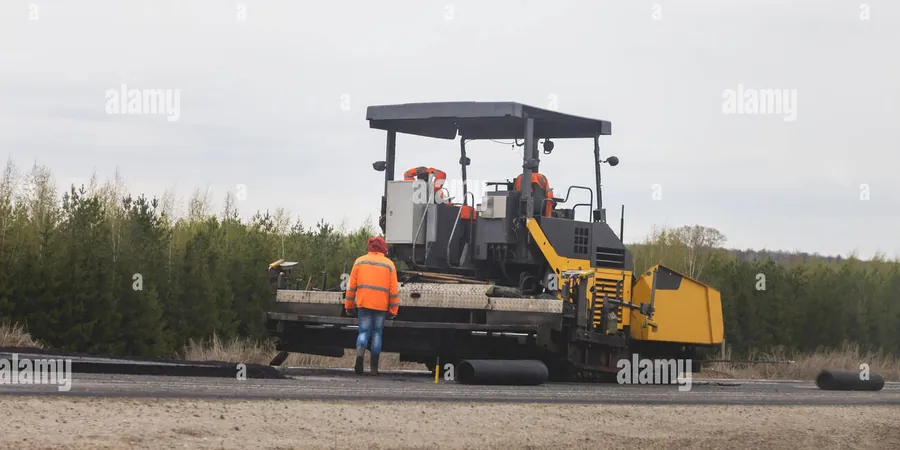
Chicago sits on a thick blanket of glacial Lake Michigan deposits—silts and lean clays that can lose half their bearing capacity when saturated. Spring thaw turns subgrades into soup. Flexible pavement design here has to answer two questions: how deep does frost really penetrate, and can the subbase drain before the next freeze cycle. Our lab runs soaked CBR on Shelby tube samples pulled from the exact grade line. We don’t guess. If the city’s frost depth is 42 inches per IDOT, then the structural section starts there. For heavy-duty lots near the Calumet River terminals, we often pair the pavement analysis with a CBR road subgrade study to lock in the design modulus before a single ton of stone is ordered.
Good asphalt on bad clay fails in two winters. The design has to start four feet below the surface.
Relevant standards
AASHTO Guide for Design of Pavement Structures (1993), AASHTOWare Pavement ME Design v2.6, IDOT Standard Specifications for Road and Bridge Construction (latest edition), ASTM D1883 – CBR of Laboratory-Compacted Soils, ASTM D4429 – Bearing Ratio of Soils In Place, Superpave Mix Design per AASHTO M323
Top questions
How much does a flexible pavement design package cost for a Chicago lot?
For a typical commercial lot or access road in the Chicago area, the design package—subgrade investigation, CBR testing, layer analysis, and final stamped report—runs between US$1,670 and US$4,910 depending on project area and traffic loading. We’ll provide a fixed fee once we review your site plan.
What’s the minimum subgrade CBR you require for flexible pavement in Chicago?
We target a soaked CBR of at least 3 percent for light-duty lots and 6 percent or higher for arterial roads. When native Chicago clay falls below those values, we specify lime or cement stabilization to bring the subgrade up to the required bearing ratio.
Do you use the AASHTO 1993 method or the Mechanistic-Empirical approach?
We use both. The AASHTO 93 method gives a solid baseline structural number, and we refine the design with AASHTOWare Pavement ME using local climate files from O’Hare. The ME approach lets us predict rutting and cracking over 20 years instead of relying on empirical serviceability loss alone.
How do you handle Chicago’s frost depth in the pavement section?
Per IDOT, the design frost depth in Chicago is 42 inches. We extend the granular base to at least that depth or incorporate a non-frost-susceptible subbase. The layer coefficients are adjusted for seasonal modulus loss, and we include edge drains to keep water out of the frost zone.