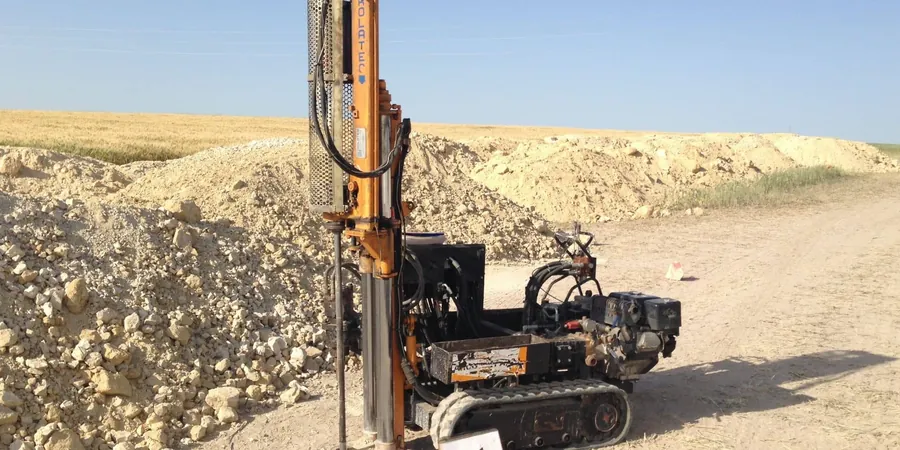
Heading a project near the Loop where you hit saturated sand at 12 feet versus one out in the western suburbs on tight glacial till represents two completely different hydraulic realities. In downtown Chicago, the subsurface often includes layers of lacustrine sand and silt that can carry significant groundwater, while the Des Plaines River valley brings its own challenges with alluvial deposits. Understanding how water moves through these formations is not optional when planning a deep basement or a tunnel. Our team runs in-situ permeability tests using both Lefranc and packer-based Lugeon setups to measure hydraulic conductivity directly in the borehole, giving you a number you can actually use in your dewatering model rather than relying on textbook estimates that don't reflect the layering beneath your site.
A single Lefranc test in a sand lens can reveal a conductivity 100 times higher than the surrounding till, completely changing the dewatering plan.
Local context
Chicago sits at an elevation of roughly 594 feet above sea level, with Lake Michigan just blocks from the downtown core. The proximity to the lake, combined with the city's 2.7 million residents and dense underground infrastructure, means a dewatering failure is never a minor event. Underestimating permeability by even half an order of magnitude can lead to pumps that can't keep up, flooded excavations, and settlement damage to adjacent buildings and utilities. The CTA tunnels, deep basements in River North, and combined sewer outfalls all operate in a groundwater environment that varies seasonally and with lake levels. A field permeability test done in August may not represent spring conditions when the water table rises. We design test programs that account for this variability, running multiple tests at different depths and correlating results with CPT or SPT data to build a defensible groundwater model that stands up to contractor scrutiny and Chicago Department of Water Management review.
Top questions
How much does a field permeability test cost in the Chicago area?
Field permeability testing typically runs between US$560 and US$1,110 per test interval, depending on the method (Lefranc vs. Lugeon), depth, number of stages, and whether a drill rig is already on site. Mobilization and borehole preparation are priced separately.
When do I need a Lugeon test instead of a Lefranc test?
Use Lugeon when you're dealing with rock or very stiff clay below the water table where you need a packer to isolate the test zone. The multi-stage pressure sequence reveals whether fractures dilate or clog, which is critical for grouting decisions and tunnel inflow estimates. Lefranc works better in soil and soft ground above the water table where a simple open-borehole setup suffices.
How long does a single permeability test take in the field?
A single Lefranc test usually takes 30 to 60 minutes once the borehole is prepared. A full five-stage Lugeon test can run 90 to 120 minutes. The time depends on how quickly flow stabilizes, which varies with formation permeability. We stay on site until steady-state conditions are confirmed across multiple readings.
Can you combine permeability testing with standard SPT drilling?
Yes, and that's the most efficient way to do it. We typically drill and log the borehole, run SPTs at the required intervals, and then set up the permeability test in a selected zone before backfilling. This way you get stratigraphy, standard penetration resistance, and hydraulic conductivity from the same hole, saving rig time and cost.