Together, we solve the challenges of tomorrow.
SEE MORE →In the realm of geotechnical engineering, ground improvement encompasses a suite of techniques designed to enhance the physical properties of soil and rock, ensuring they can safely support structural loads and resist environmental forces. In Chicago, a city built upon a complex glacial legacy, the importance of these methods cannot be overstated. From the towering skyscrapers of the Loop to the sprawling infrastructure networks that connect the metropolitan area, the performance of foundations and earthworks hinges on the ability to transform weak, compressible, or otherwise problematic ground into a reliable engineering material. This category covers the analysis, design, and specification of ground treatment solutions that mitigate settlement, increase bearing capacity, and reduce liquefaction potential, directly addressing the subsurface challenges that define construction in this region.
Chicago's geology is dominated by a sequence of glacial tills, outwash deposits, and lacustrine clays deposited during the Wisconsinan glaciation. Near the surface, much of the downtown and lakeshore areas are underlain by the notoriously weak and compressible Blodgett and Deerfield formations, often referred to collectively as Chicago clays. These soft, silty clays can extend to depths exceeding 50 feet, presenting significant challenges for shallow foundations due to their low shear strength and high consolidation settlement potential. Deeper strata include dense tills and dolomitic bedrock, but reaching them is not always economical or practical. The high water table near Lake Michigan further complicates excavation and compaction efforts, making in-situ improvement a critical strategy for geotechnical engineers working in the Windy City.
All ground improvement work in Chicago must comply with the Chicago Building Code, which adopts and amends the International Building Code (IBC). Chapter 18 of the IBC, governing soils and foundations, is strictly enforced, requiring thorough geotechnical investigations and design reports prepared by licensed professional engineers. Specifically, Section 1803 mandates analysis of settlement, bearing capacity, and lateral earth pressures, while Section 1804 outlines allowable foundation pressures and the conditions under which improvement is necessary. The code references consensus standards such as those from ASTM International for material testing and the American Society of Civil Engineers (ASCE) for quality control. For deep improvement methods, adherence to FHWA guidelines and local Illinois Department of Transportation specifications is often required, particularly for public works and transportation projects where performance under cyclic loading is a primary concern.
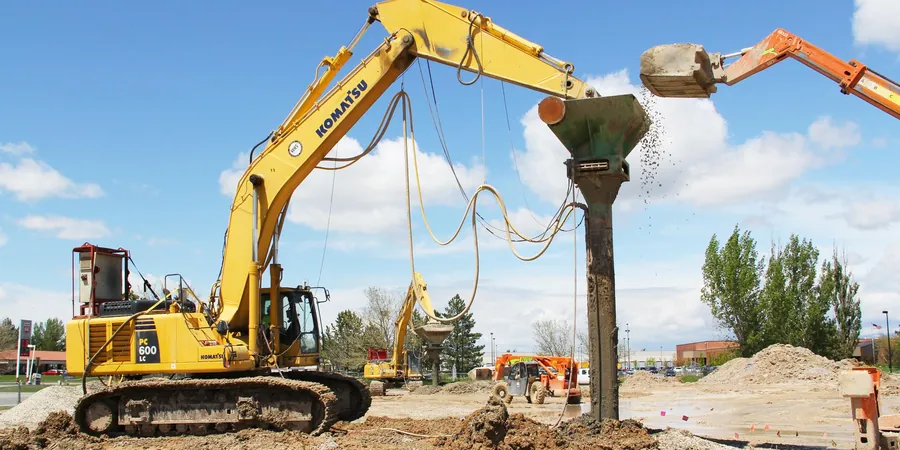
Projects across Chicago routinely demand specialized ground improvement solutions. High-rise developments on the soft clays of Streeterville or the South Loop often require deep foundation support combined with mass ground treatment to control differential settlement and permit the use of mat foundations. Infrastructure ventures, including the expansion of O'Hare International Airport and the Chicago Transit Authority's rail extensions, frequently encounter loose granular fills and sands where densification is essential to prevent seismically-induced liquefaction. For these scenarios, advanced techniques such as stone column design are employed to reinforce clayey soils and accelerate drainage, while vibrocompaction design proves invaluable for improving the density of granular layers without excavation. Industrial tank farms along the Calumet River and warehouse complexes on former lake plain deposits similarly rely on these methods to meet stringent settlement tolerances and ensure long-term operational stability.
The primary objectives are to increase bearing capacity, minimize total and differential settlement, and mitigate liquefaction risk. Chicago's soft, compressible clays and loose granular deposits often cannot support structural loads without treatment. Improvement techniques densify, reinforce, or replace these soils, ensuring foundations perform within required tolerances and resist the effects of high groundwater and potential seismic events.
The Chicago Building Code adopts the IBC, requiring a comprehensive geotechnical investigation and a design report stamped by a licensed engineer. It mandates analysis of settlement and bearing capacity under Chapter 18, with improvement methods validated through testing. The code references ASTM and ASCE standards, and for public projects, IDOT and FHWA specifications often apply, ensuring quality and safety.
Ground improvement is often preferred when treating large areas, reducing construction time, or when deep foundations are impractical due to cost or access. It is ideal for supporting mat foundations on soft clays, mitigating liquefaction under large footprints, and improving sites where pile driving would cause excessive vibration or noise. The choice depends on a life-cycle cost-benefit analysis and settlement performance criteria.
Indicators include the presence of soft, organic silts or clays with Standard Penetration Test (SPT) values below 4, high groundwater within granular fills, or a history of settlement in nearby structures. Pre-construction soil borings revealing thick layers of compressible Chicago clay or loose outwash sands below the water table strongly suggest that improvement will be necessary to meet code-mandated performance thresholds.